
Data Architecture & Modelling · Cobalt Giraffe Insights
How current is your intraday portfolio valuation?
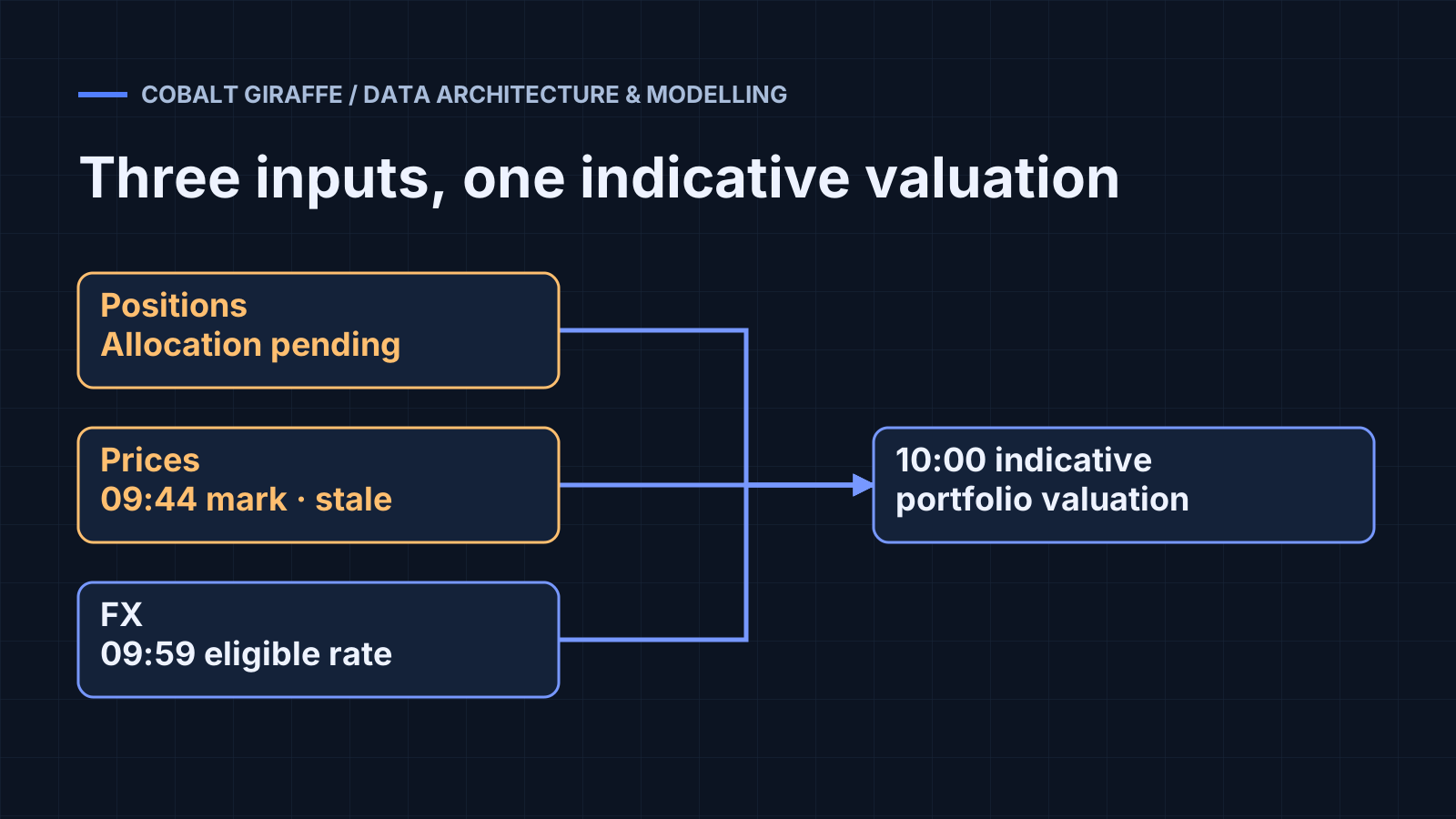
At 10:00, a portfolio manager is deciding whether there is room to add to a position. The dashboard refreshed seconds ago. One trade has yet to be allocated and the most recent eligible price for another holding is 16 minutes old. The headline value looks current because the calculation is current. Whether it supports the decision depends on the inputs.
Show the clocks that matter
A portfolio valuation brings together positions, prices and, where needed, FX rates. Each has a time and a reason it was selected. A useful intraday service records the valuation point, when it calculated the result, and which inputs it actually used.
| Input at the 10:00 valuation point | What the service knows | What to show |
|---|---|---|
| Positions | The 09:58 block trade is known. Portfolio allocations are pending. | Position coverage incomplete. Identify the affected portfolio set if known, or show the unresolved exposure at desk level. |
| Prices | One holding’s last eligible mark was observed at 09:44. | Flag the holding and price time if the mark exceeds the policy for that instrument and market session. |
| FX | The most recent eligible rate for a foreign holding was observed at 09:59. | Show the rate source and time. Apply the FX freshness policy independently of the price policy. |
Define those policies with the teams using the figure. A last close can be a valid mark while a market is shut. During an active session the same age may be unacceptable for a liquid instrument. Decide what users can do with an indicative figure when coverage is incomplete, including when an exposure check should pause for review. Keep the reason visible beside the number.
Recalculate what changed
An accepted allocation changes the portfolios receiving the trade. A new price changes portfolios holding the instrument. An FX update changes valuations with exposure to that currency. Use those dependencies to identify which portfolios to recalculate and retain the input references behind each published result.
At 10:07, the late allocation splits the 09:58 trade 600/400. If policy makes the allocation effective at execution, the service can update the current indicative view and issue a versioned restatement of 10:00. The two outputs answer different questions. The current view uses inputs eligible for its own valuation point. The restated view uses inputs eligible for 10:00 and records what became known later.
This matters when inputs arrive out of sequence or are replayed. A delayed message needs to be assessed using its effective time and source revision before it can change a position or replace a mark.
Reconcile to the official close
Compare the intraday result and the official end-of-day figure at a common valuation point. Check quantities first, then prices, FX, cash and accruals. Break differences down into explainable reasons, such as an allocation posted after the intraday run or a different approved pricing source. Assign the unresolved breaks to someone who can investigate them.
For the portfolio manager, make three things visible next to the figure. Show what time it represents, what material input is missing or stale, and whether the figure is indicative or official. A faster refresh is valuable when the reader can see what has actually changed.