
Enterprise Architecture · Cobalt Giraffe Insights
The application is being retired. What happens to the work it does?
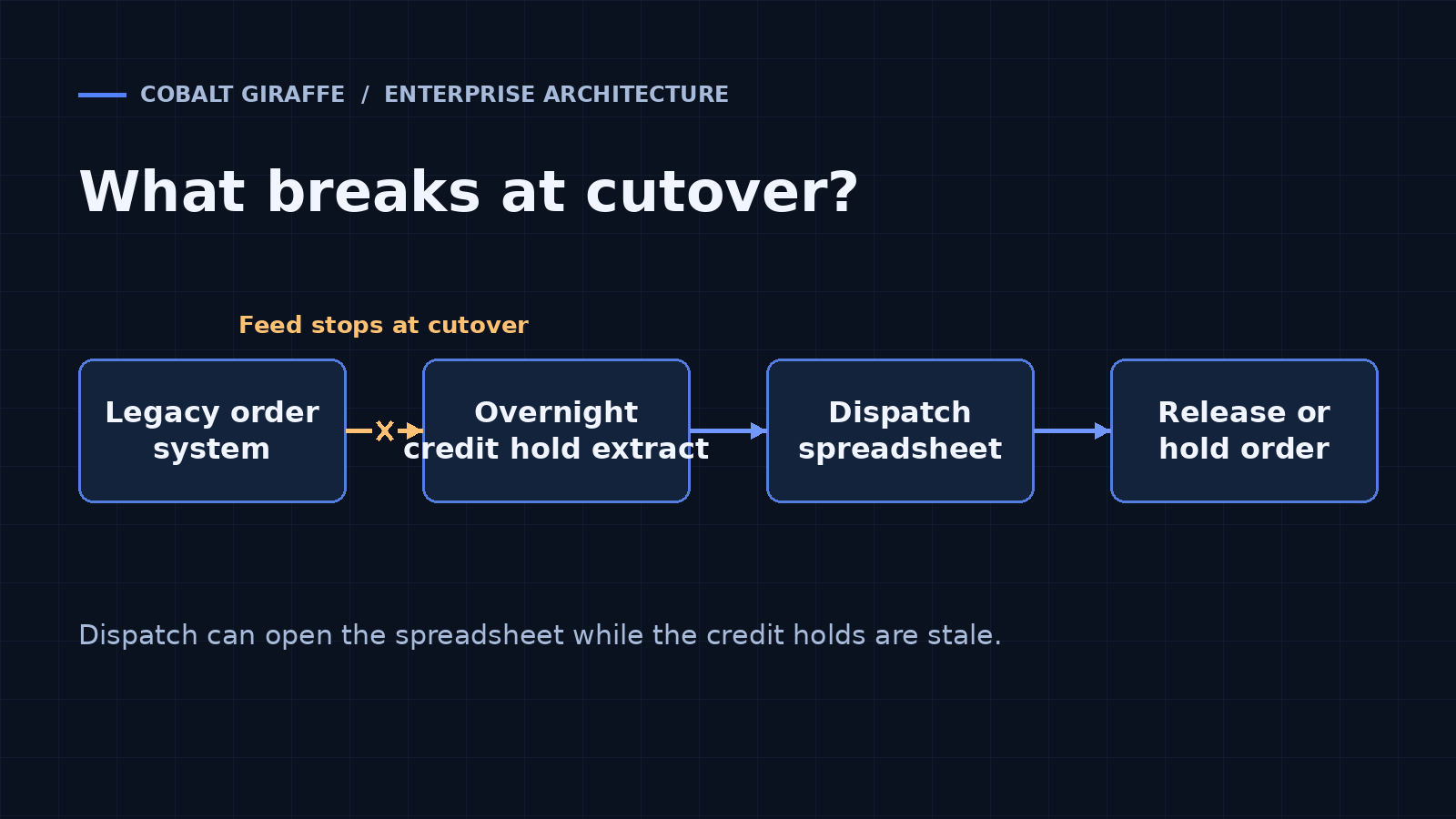
On Friday, the old order system is switched off. Its replacement takes orders, tracks shipments and passes the migration checks. On Monday morning, the dispatch team opens the spreadsheet it uses to hold orders with unresolved credit exceptions. The spreadsheet opens as usual. It still shows Friday’s data.
In this fictional distributor, an overnight extract from the old system fed the spreadsheet. Dispatch used it to decide which orders to release before the first carrier collection. The replacement covers the documented order process, but nobody included the extract in the cutover plan. The spreadsheet failed silently. A newly held order could go out on the first truck.
Trace the work that depends on the application
An application inventory gives you a place to start. For retirement, follow what the application supplies through to the people who use it and the decisions they make. Ask Dispatch to walk through the first hour of the day. Check the schedule and output of the overnight job, then find out who notices when it fails. The workarounds people rely on often surface in that conversation.
| What to trace | What the team discovers |
|---|---|
| Business decision | Dispatch releases an order or holds it for review before the first collection. |
| Information needed | The order identifier, current credit hold and when that status was last refreshed. |
| Current dependency | An overnight export feeds a spreadsheet that Dispatch checks before loading. |
| Owners | Credit Control owns the hold decision. Dispatch owns the release process. |
| Retirement condition | Dispatch can see current holds in time for collection and knows what to do if the information is stale. |
This is a small example of model-based enterprise architecture. The relevant relationships connect an application, a data flow, two teams and a business decision. Record them together and the programme can see why a missed file transfer has consequences beyond IT.
Change the cutover plan
The replacement system already holds current credit decisions. One option is to give Dispatch a queue in the new system and train the team before cutover. Another is to regenerate the existing file from the new system as a bridge. The queue could reduce spreadsheet handling, but it needs access, training and a way to flag missing data. The bridge gives Dispatch a familiar workflow, but someone must own the feed and agree when it can be withdrawn.
Either way, rehearse the first Monday. Put a hold on an order after the final legacy extract and check that Dispatch sees it before the first collection. Simulate a missed refresh and check that staff can recognise stale information and follow the agreed fallback. Have Credit Control confirm the hold rules and Dispatch confirm it can run the release process.
Use the same approach for other consumers of the old system, including occasional processes such as month-end reporting. Where people need historic records, agree who can retrieve them and test that retrieval before switching off access. Close each known dependency with an owner and evidence that the work can continue, or with an explicit decision to stop doing it.
The retirement plan should say what the business will be able to do on Monday morning, who will do it and how they will know the information they’re acting on is current.